Fyntralis Fyntralis

Platform features · Fyntralis

Nine capabilities, walked in the order a business actually uses them.

Debits equal credits — every entry

From ledger to payroll in one system

This guide explains core cloud accounting capabilities in the order a business actually uses them, from double-entry bookkeeping and general ledger to payables, receivables, cash, inventory, and reporting. Each part names inputs, controls, and outputs.

Written for owners and staff in South Korea who need KRW-ready, accountant-readable books.

A sale with VAT, posted Ledger

Every transaction posts a debit and a credit so the books stay balanced. A 1,100,000 KRW sale splits into revenue and output VAT on one side, and either cash or receivables on the other. Deleting an entry breaks the audit trail, so corrections post as reversing entries that preserve history.

What it needs

  • A date and a description
  • At least two accounts
  • A tax code where VAT applies

What the visitor walks in with

Nine capabilities

The capabilities, one ledger sheet each

Each plate below names the inputs it takes, the controls that hold it, and the output it produces. Read them in order, or jump to the one your Monday morning needs.

Double-entry bookkeeping in one clear example 01 of 09 Ledger

Every transaction posts a debit and a credit so the books stay balanced. A single sale with VAT, a supplier bill, and a bank receipt are enough to see the pattern: one side moves, the other side answers, and the entry closes. Deleting entries breaks the trail a reviewer follows; correction entries preserve history without rewriting it. Short example, lasting habit.

What you leave with

A posting habit you can defend to an outside accountant, on entries you made months ago.

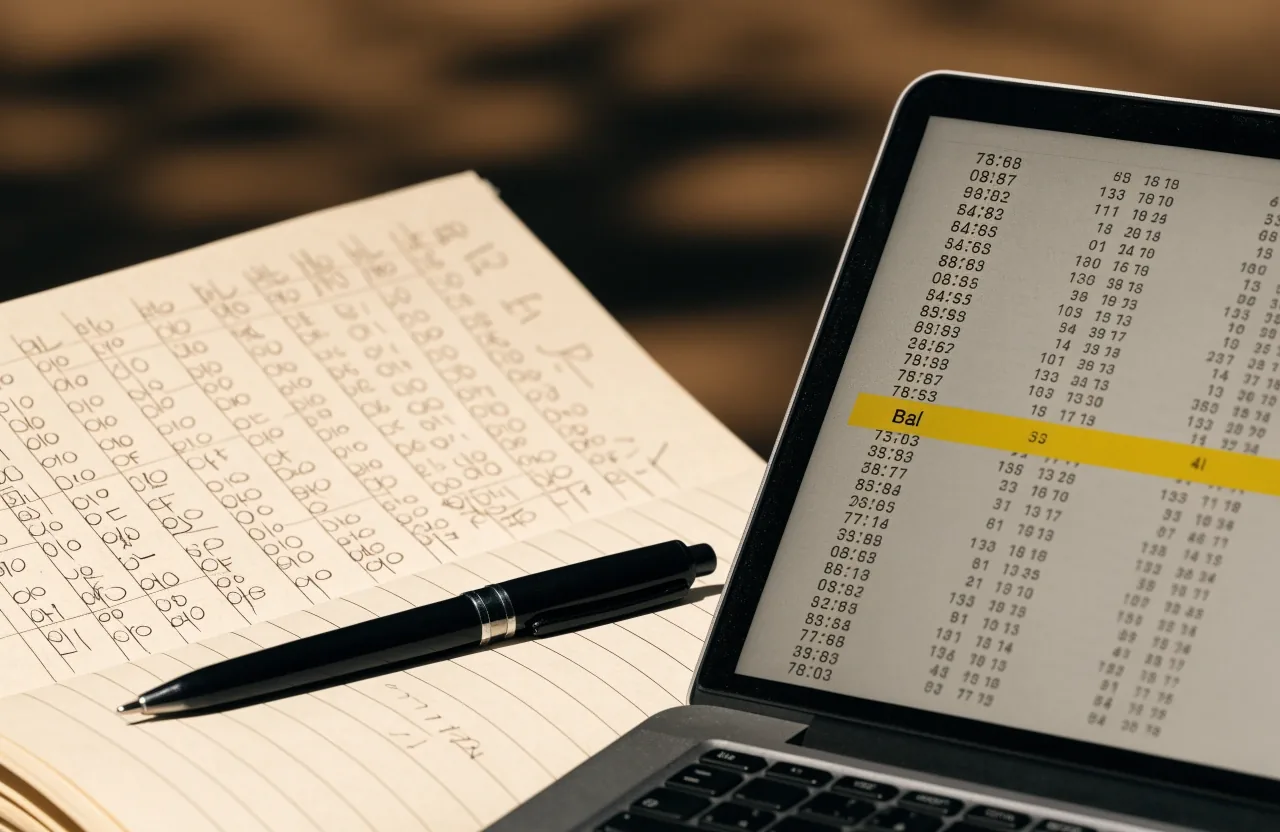
A ruled white sheet laid over a ledger page with a pen across the final row.
General ledger and chart of accounts 02 of 09 Ledger

Services starter

Revenue accounts split by service line, with a small, stable numbering band for consulting, retainer, and education income.

Goods starter

Inventory, COGS, and vendor accounts sit in their own band so item cost and margin reports come out clean without rearranging the whole chart.

Adding an account

Add when a report needs to split a number the owners actually act on. Name in English, note in Korean if staff read the ledger in Hangul.

Accounts payable with approvals that stick 04 of 09 Payables

Accounts payable covers capture, approval, payment, and archiving. Bills arrive by upload or by email into a shared inbox, larger ones take a two-step approval, and payment runs on a scheduled KRW transfer. Withholding is recorded where it applies, so vendor history stays clean across the year.

Why the approvals matter

When a due date is visible on the row, late fees stop being a surprise in the bank statement. Two buyers can't approve the same bill.

Hands holding a phone at a desk with a stack of supplier invoices and a paper bank passbook behind.

Frames from the bench — month-end, week three

Slide to walk the desk

The work, one frame at a time

A bank statement page set down on a desk beside an open laptop at 3pm.
The statement lands mid-afternoon, when a page can still be reconciled without a marathon.
A pen lifting away from a just-ticked row in a paper passbook.
The moment a match lands: a tick on the paper beside a tick on the screen.
A back-office desk with a ruled paper spread, laptop, calculator and an empty chair under cold window light.
The same bench an hour later, when the reconciliation is a desk habit rather than an event.

Nine capabilities, three columns you read down

Inputs · Controls · Outputs

Every capability has the same three questions

Read any row left to right the way you read a ledger: the input the system takes, the control that holds it honest, and the output your accountant or owner actually receives.

Capability

Double-entry bookkeeping

Input

Date, description, two accounts, VAT code

Control

Correction entries, no deletion on posted rows

Output

A balanced trail an outside accountant can review

Capability

Accounts payable

Input

Vendor bill by upload or email inbox

Control

Two-step approval above a set amount, due dates visible

Output

A scheduled KRW payment run and clean vendor history

Capability

Accounts receivable

Input

Quote, invoice, payment terms

Control

Polite reminder sequence, partial-payment allocation

Output

Aging list with owner and date assigned per row

Capability

Bank reconciliation

Input

Daily KRW bank and card imports

Control

Rule-based matching, manual review for exceptions

Output

A reconciled set, not a pile of statements

Capability

Invoice automation

Input

Quote, job, or time entries

Control

Pre-send checklist, credit notes instead of edits

Output

Issued tax invoice, delivery and payment tracking

Capability

Inventory

Input

Purchase, sale, return, adjustment movements

Control

Average cost, low-stock alerts, cycle counts

Output

Order-to-payout reconciliation for marketplace sellers

Capability

Cash flow views

Input

Aging lists, due-date calendar, payroll and tax reserves

Control

One weekly meeting, one page, one owner per action

Output

Timing gaps surfaced before they become cash problems

Capability

Reporting

Input

Period, department, project or location filter

Control

Month-end close steps that lock the period for review

Output

A balanced P&L, balance sheet, and cash flow statement

Payables, receivables and the invoice trail

Approvals that stick, receivables that get paid, invoices tied to evidence

Approval that survives

Two people agreeing on a large bill in a shared inbox sounds simple until the bill scrolls past. A two-step approval, kept on the row rather than in a chat, means the amount cannot leave the account before both names are on the entry. Withholding is recorded at capture, not during the year-end scramble.

Reminders that stay courteous

Payment terms fit Korean B2B norms. Reminders run in a polite sequence, logged on the row, so an owner knows what was sent and when. Partial payments allocate against the invoice instead of resetting the aging clock.

A pre-send checklist

Before the invoice leaves: client name spelled as on the tax registration, supply date correct, VAT code present where it belongs, e-tax invoice issued through the proper channel, and a note saved on who owns follow-up. Small Seoul offices use this list because the alternative is a credit note next month.

An accountant's reviewing desk with a paper reconciliation page, a highlighter, a bank slip and a paper passbook.
A reviewing desk in the same flat daylight: the paper check that closes a payables row before it joins the payment run.

Money that moves, stock that sits, cash that flows

Three practical reads

Bank reconciliation

Match daily, don't save it for month-end

Connect KRW bank and card accounts, import daily, and match by rule with a manual review for the exceptions a rule cannot see. Transfers between your own accounts, bank fees, refunds, and unknown deposits each have their place in the suspense account until a human decides. Weekly clearing beats a month-end marathon, and the accountant on the other side of the year gets a reconciled set rather than a pile of statements to untangle.

Suspense handling matters: an unknown deposit parked for a week is a question you can still answer; parked for a quarter, it becomes archaeology.

Inventory tracking

Small stockrooms, real numbers

Track quantities, unit costs, and movements across purchase, sale, return, and adjustment. Average cost is the default that keeps small shops honest without a spreadsheet of FIFO layers; low-stock alerts fire before a customer asks; cycle counts rotate through the shelf instead of shutting the shop for a full count. Online sellers reconcile marketplace payouts against orders and fees so commission and shipping sit in their own lines.

The point is that shrinkage stops hiding: an adjustment is visible on its own row, with a date and a name.

Cash flow views

A one-page weekly pack

Aging lists, a due-date calendar, and a short forecast show timing gaps early. The weekly pack that owners actually open keeps four numbers on one page: cash on hand, receivables due in fourteen days, payables due in fourteen days, and the payroll-plus-tax reserve. Seasonal swings common to academies, studios, and distributors get their own line so a strong January and a lean February don't both come as a surprise.

One meeting, clear actions. If nobody closes a row, the number on the page changes next week — that's how you know the pack is working.

Common questions before you choose

Fold to open

Questions we hear most from owners and staff

If your question isn't here, the fastest route is the workflow conversation — the team reads every message.

Do I need an outside accountant to use a cloud accounting platform? Open

No. The platform keeps the ledger, and you or your staff can post daily entries. What many Korean businesses do instead is run the platform in-house and hand a reconciled set to an outside accountant at filing points, which keeps the conversation concrete.

How long does a chapter take if I'm starting from zero? Open

The lesson plates on this page are the syllabus. Walking them end to end at a realistic pace takes a handful of evenings, but you don't have to walk them in order. Most visitors start with the one capability that is failing this week and expand from there.

Which capability should a small business switch on first? Open

If the bank statement and the ledger never quite agree, bank reconciliation first. If the owner has no idea what will be paid next week, the weekly cash-flow pack. If bills keep arriving late to the payer, AP approvals. Invoice automation is usually a third step, because it works better once the AR terms are already agreed.

Are the comparisons a ranking or an advertisement? Open

They are neither. Fyntralis writes them as a working reading list — what a capability does, who it fits, and where the reading is thin. If a platform we describe is not the right one for your business, we would rather you took a different one and came back with the good question than signed up on our recommendation and churned in three months.

The ledger you walked on this page

Closed, 2026

Fyntralis · 14 Teheran-ro 88-gil, Gangnam-gu, Seoul 06179, South Korea · Mon–Fri 9:00–18:00

Next step

Have a workflow question? Bring it to the team.

Tell us the shape of your week — supplier bills, bank matches, VAT timing — and we'll point you to the reading that fits, or say plainly that a different platform does.

+82 2-6313-9420 · [email protected]

Debits equal credits — every entry